
Shopping cart

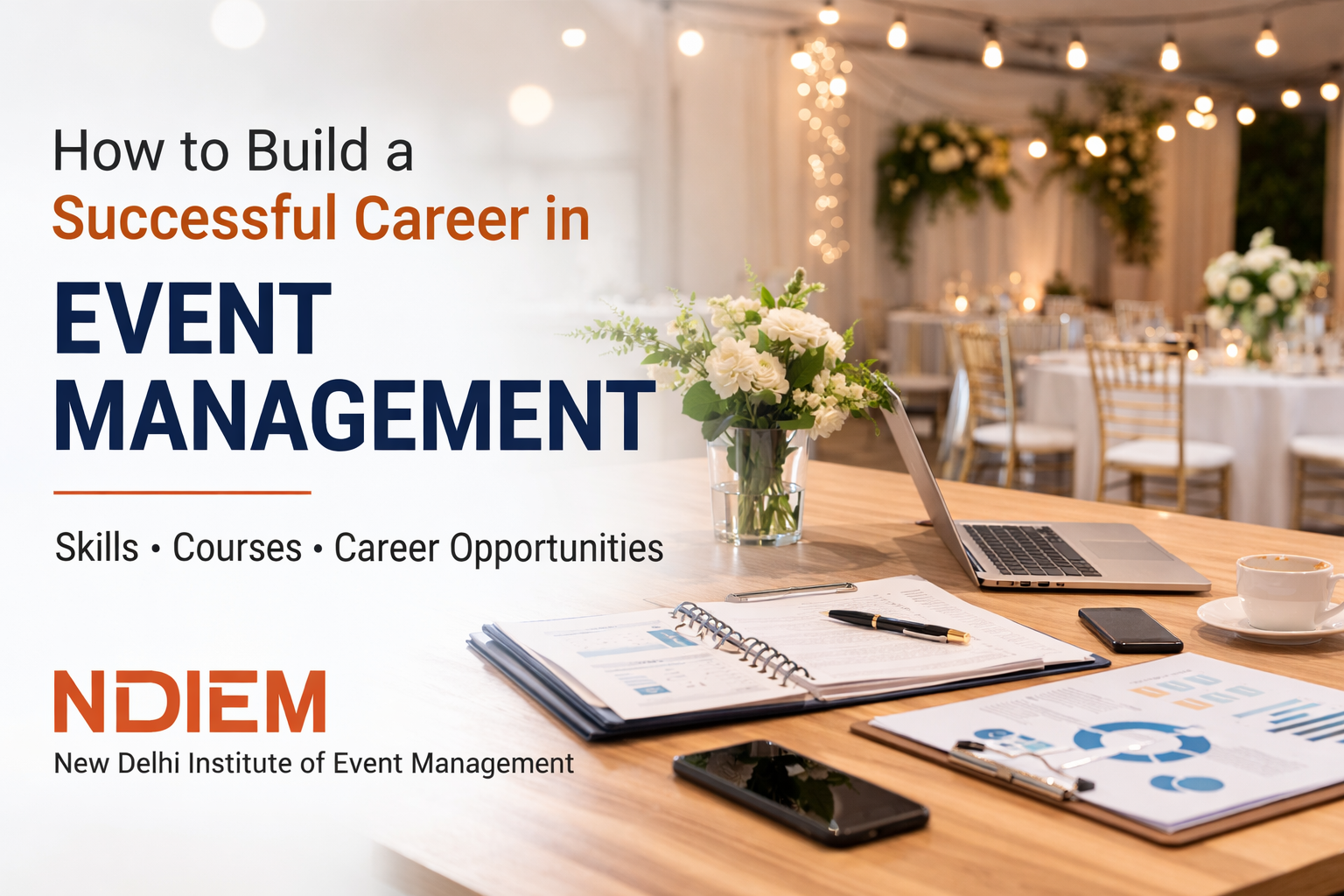
How to Build a Successful Career in Event Management in India

How to Build a Successful Career in Event Management in India

1. Introduction – The Rise of Event Management as a Career in India

Over the past decade, event management has emerged as one of the most exciting and rapidly growing career options in India. From luxurious destination weddings to high-profile corporate conferences, concerts, exhibitions, brand launches, and sports tournaments, events have become an essential part of modern business, entertainment, and social culture.

India’s booming economy, growing corporate sector, and increasing demand for experiential celebrations have significantly expanded the event industry. Large cities such as Delhi, Mumbai, Bangalore, Goa, and Jaipur have become major hubs for event management companies handling everything from international conferences to celebrity weddings.

One of the biggest contributors to the growth of the event industry in India is the massive wedding market. Indian weddings are known for their grandeur, creativity, and multi-day celebrations. Destination weddings, luxury themed weddings, and celebrity weddings have created huge opportunities for professional event planners and wedding specialists.

Similarly, corporate events such as product launches, brand promotions, award ceremonies, business conferences, exhibitions, and trade shows are increasing every year. Companies invest heavily in events to strengthen their brand image, build relationships with clients, and engage employees.

Live entertainment events such as music concerts, cultural festivals, fashion shows, and sports tournaments are also expanding rapidly. These events require skilled professionals who can manage large crowds, coordinate multiple vendors, and ensure smooth execution.

Because of this rapid growth, the demand for professional event managers has increased dramatically. Businesses and individuals now prefer hiring trained professionals instead of handling events themselves.

As a result, event management is becoming an increasingly popular career choice among students who enjoy creativity, planning, and leadership.

Professional education plays a crucial role in building a strong foundation in this field. Institutions like NDIEM (New Delhi Institute of Event Management) offer industry-focused training programs that help students develop practical skills, gain real-world experience, and build successful careers in the event management industry.

With the right education, creativity, and determination, event management offers limitless opportunities for young professionals in India.

2. What is Event Management? Understanding the Industry

Event management is the process of planning, organizing, coordinating, and executing events professionally. It involves managing every aspect of an event, from the initial idea and planning stage to the final execution and post-event evaluation.

An event manager is responsible for turning a concept or idea into a successful and memorable event. This requires careful planning, coordination with multiple teams, effective communication, and strong problem-solving skills.

Event management includes various responsibilities such as:

  • Concept development
  • Budget planning
  • Venue selection
  • Vendor coordination
  • Guest management
  • Marketing and promotion
  • On-ground execution

Event managers ensure that every detail of an event runs smoothly and meets the expectations of clients and attendees.

The event management industry includes several types of events.

Corporate Events

Corporate events are organized by companies for business purposes. These include conferences, seminars, product launches, brand activations, employee engagement events, and award ceremonies.

Weddings

Wedding planning is one of the biggest segments in the event industry. Event managers plan destination weddings, luxury weddings, themed weddings, and traditional ceremonies.

Social Events

These include birthdays, anniversaries, family celebrations, and private parties.

Exhibitions and Trade Shows

Large business exhibitions allow companies to showcase products and services to customers and investors.

Concerts and Entertainment Events

Music concerts, cultural festivals, and fashion shows require large-scale event management and coordination.

Sports Events

Sports tournaments and competitions involve logistics, crowd management, media coordination, and venue planning.

Event management is a combination of creativity, leadership, strategic planning, and coordination. Professionals in this field work with clients, vendors, artists, designers, production teams, and marketing professionals to deliver unforgettable experiences.

3. Why Event Management is a Great Career Option in India

Event management has become one of the most attractive career options for young professionals in India. The industry is growing rapidly, creating exciting opportunities for creative individuals who enjoy planning, organizing, and executing large-scale events.

India’s event industry has expanded significantly in recent years. Businesses are increasingly using events for marketing, networking, and brand promotion, while individuals are investing heavily in weddings and celebrations.

One of the biggest advantages of a career in event management is that it is a highly creative profession. Every event is unique and requires innovative ideas, themes, and experiences.

Event managers have the opportunity to work on exciting projects such as:

  • Celebrity weddings
  • International conferences
  • Fashion shows
  • Music festivals
  • Corporate brand launches
  • Luxury destination weddings

Another major benefit is the opportunity to travel and explore new locations. Many events take place in different cities and countries, especially destination weddings and international conferences.

Event management also allows professionals to build strong networks with industry leaders, business executives, celebrities, designers, and media professionals.

The financial potential in the event industry is also significant. Successful event planners and managers can earn high incomes, especially when working with luxury weddings, corporate clients, and large brands.

The Indian wedding industry alone is worth billions of dollars, making it one of the largest event segments in the country.

As the industry continues to grow, the demand for trained professionals is increasing. Students who pursue professional training from reputed institutes such as NDIEM gain the skills and experience needed to enter the industry confidently and build successful careers.

4. Key Skills Required to Become a Successful Event Manager

Event management is a dynamic and challenging profession that requires a combination of creativity, leadership, and organizational skills. Successful event managers possess several important abilities that allow them to manage complex events efficiently.

One of the most important skills in event management is communication. Event managers interact with clients, vendors, sponsors, artists, and team members. Clear communication ensures that everyone understands their responsibilities and the event runs smoothly.

Leadership ability is another crucial skill. Event managers lead large teams that include designers, technicians, decorators, caterers, and logistics staff. Strong leadership helps coordinate all departments effectively.

Creativity is also essential in the event industry. Clients expect unique themes, innovative decorations, engaging experiences, and memorable event concepts. Creative thinking allows event managers to design events that stand out.

Time management plays a critical role in event planning. Events involve multiple deadlines such as venue bookings, vendor confirmations, marketing promotions, and stage setup. Managing time effectively ensures that everything is completed before the event day.

Budget management is another important skill. Event managers must plan events within the client’s budget while maintaining quality. This requires careful cost planning and smart negotiation with vendors.

Problem-solving ability is essential because unexpected challenges often arise during events. Weather issues, technical failures, vendor delays, or guest management problems require quick thinking and immediate solutions.

Negotiation skills help event managers secure better deals with suppliers, venues, decorators, and service providers. Effective negotiation helps control costs while maintaining quality.

Finally, team management is vital for successful events. Event managers coordinate multiple teams working simultaneously. Managing these teams effectively ensures smooth execution.

These skills allow professionals to handle large-scale events confidently and deliver exceptional experiences for clients and guests.

5. Educational Qualification for Event Management in India

While creativity and organizational skills are important, professional education plays a significant role in building a successful career in event management.

Today, many universities and specialized institutes offer courses that provide structured learning and practical training in event management.

Students can pursue various educational programs such as:

  • Diploma in Event Management
  • Bachelor’s Degree in Event Management
  • BBA in Event Management
  • MBA in Event Management
  • Short-term certification courses

These programs help students understand the business side of events while developing creative and operational skills.

Event management courses typically cover subjects such as event planning, marketing, logistics, budgeting, hospitality management, and public relations. Students also learn how to coordinate vendors, manage guests, and execute large events professionally.

One of the biggest advantages of formal education in event management is practical exposure. Many programs include internships, live event training, and hands-on experience with real industry projects.

Institutes such as NDIEM (New Delhi Institute of Event Management) focus on industry-oriented training that prepares students for real-world challenges.

Professional training helps students build confidence, develop technical knowledge, and understand industry standards. It also provides networking opportunities with experienced professionals and event companies.

With the right education and practical experience, students can enter the event industry with strong skills and better career opportunities.

6. Event Management Courses After 12th

Students who are interested in pursuing a career in the event industry can start their journey immediately after completing their 12th standard. The event management field offers several educational pathways that allow students to develop professional skills early and build a strong foundation for their future careers.

One of the most popular options after 12th is a Diploma in Event Management. These diploma programs typically last between 6 months to 1 year and provide students with basic knowledge about event planning, coordination, marketing, and event execution. Diploma courses are ideal for students who want to enter the industry quickly and gain practical experience.

Another option is enrolling in Bachelor’s degree programs such as BBA in Event Management. These programs usually last three years and offer a comprehensive understanding of event planning, business management, marketing strategies, hospitality management, and public relations. A bachelor’s degree provides deeper knowledge and opens doors to higher-level career opportunities.

Many institutes also offer practical training programs and certification courses that focus on hands-on learning. These programs emphasize real-world event planning and provide students with exposure to live events, industry professionals, and real client projects.

Event management courses after 12th often include subjects such as:

  • Event planning and logistics
  • Event marketing and branding
  • Sponsorship management
  • Hospitality and guest management
  • Vendor coordination
  • Budget planning

Internships are also an essential part of these programs. Students get opportunities to work on live events, exhibitions, corporate conferences, and wedding celebrations, which helps them understand the practical aspects of event management.

Institutes like NDIEM (New Delhi Institute of Event Management) offer industry-oriented courses designed to provide students with both theoretical knowledge and practical exposure. Starting professional training early helps students build confidence, gain industry insights, and develop essential skills required to succeed in the event management industry.

7. Subjects You Study in Event Management Courses

Event management courses are designed to provide students with both creative and managerial skills required to plan and execute successful events. These programs cover a wide range of subjects that help students understand the various aspects of event planning and management.

One of the most important subjects in event management is Event Planning and Logistics. Students learn how to design event concepts, plan schedules, manage venues, coordinate vendors, and ensure smooth execution of events.

Another key subject is Marketing and Branding. Events often serve as powerful marketing tools for companies and organizations. Students learn how to promote events, build brand awareness, attract audiences, and create effective promotional strategies.

Hospitality Management is another important area of study. Event managers must ensure that guests, clients, and participants have a comfortable and memorable experience. Students learn about guest relations, accommodation planning, catering management, and hospitality services.

Public Relations (PR) is also an essential subject in event management courses. PR helps build strong relationships with media houses, sponsors, celebrities, and industry partners. Students learn how to manage media coverage, handle press conferences, and promote events through publicity campaigns.

Budget planning and financial management are equally important subjects. Students learn how to estimate event costs, manage budgets, negotiate with vendors, and ensure that events are executed within financial limits.

Event management courses also teach Event Production, which includes stage design, lighting, sound systems, visual effects, and overall event aesthetics.

Vendor management is another key subject that teaches students how to coordinate with decorators, caterers, technicians, artists, and service providers.

By studying these subjects, students gain a complete understanding of how to organize professional events and handle real-world event challenges.

8. Importance of Practical Training in Event Management

Event management is one of the few industries where practical experience is as important as theoretical knowledge. While classroom learning provides a foundation, real success in this field comes from hands-on experience and on-ground event exposure.

Events are dynamic and unpredictable. Managing them requires quick decision-making, strong coordination, and the ability to handle real-time challenges. This is why practical training plays a crucial role in event management education.

One of the most effective ways students gain practical experience is through internships. During internships, students work with event management companies and assist professionals in planning and executing real events. This allows them to understand how the industry operates and how large events are managed.

Students involved in live event training learn many essential aspects of event management such as:

  • Stage and venue setup
  • Lighting and sound coordination
  • Guest and crowd management
  • Vendor communication
  • Artist coordination
  • Event timeline management

On-ground exposure also helps students develop confidence and improve their communication skills. They learn how to interact with clients, negotiate with suppliers, and work with multiple teams under pressure.

Another advantage of practical training is that students understand the importance of teamwork. Events involve several departments working together, including logistics, production, design, marketing, and hospitality.

Institutes like NDIEM emphasize hands-on learning by providing students with opportunities to participate in real events, exhibitions, conferences, and live productions. This practical exposure prepares students for the real challenges of the event industry.

Students who gain strong practical experience during their education are more confident, skilled, and ready to enter the professional event management industry.

9. Types of Careers in Event Management

The event management industry offers a wide variety of career opportunities for professionals with different interests and skills. As the industry continues to grow, many specialized roles have emerged within the field.

One of the most common roles is that of an Event Planner. Event planners are responsible for designing event concepts, managing client requirements, planning schedules, and coordinating all event activities.

Another popular career option is Wedding Planner. Wedding planners specialize in organizing weddings, from venue selection and theme design to guest management and entertainment arrangements.

Corporate Event Managers focus on organizing business events such as conferences, product launches, seminars, brand promotions, and award ceremonies. They work closely with corporate clients to deliver professional events that represent the company’s brand.

Event Marketing Managers are responsible for promoting events and attracting audiences. They design marketing campaigns, manage social media promotions, and coordinate advertising strategies.

A Production Manager handles the technical aspects of events. This includes stage setup, sound systems, lighting arrangements, visual displays, and overall production management.

Event Coordinators assist event managers in organizing logistics, vendor communication, and event scheduling. They ensure that all event activities run according to plan.

Another specialized role is Artist Manager, who manages performers, celebrities, musicians, and entertainers participating in events.

These roles demonstrate that the event management industry offers diverse career opportunities. Professionals can choose roles that match their interests, whether it is creative planning, technical production, marketing, or client management.

10. Corporate Events vs Wedding Events – Career Opportunities

Two of the biggest segments in the event management industry are corporate events and wedding events. Both offer excellent career opportunities but require different planning approaches and management styles.

Corporate events are organized by companies for business purposes. These include conferences, seminars, product launches, exhibitions, training programs, and brand activation campaigns.

Corporate event managers work closely with businesses and organizations. Their primary goal is to create professional events that promote the company’s brand, build relationships with clients, and communicate important business messages.

Corporate events require precise planning, strict schedules, and professional presentations. Attention to detail and strong coordination skills are essential.

On the other hand, wedding events focus on personal celebrations. Weddings are emotional and cultural events where families expect memorable experiences.

Wedding planners handle tasks such as:

  • Destination wedding planning
  • Theme design and décor
  • Guest management
  • Entertainment arrangements
  • Catering coordination

The wedding industry in India is one of the largest event sectors and continues to grow every year. Luxury weddings, themed weddings, and international destination weddings have created huge opportunities for professional planners.

Both corporate and wedding event segments offer exciting career opportunities, and professionals can choose the area that best matches their interests and creativity.

11. How Event Managers Plan a Successful Event

Planning a successful event requires careful preparation, strategic thinking, and strong coordination between multiple teams. Professional event managers follow a structured process to ensure that every event runs smoothly and meets client expectations.

The first step in event planning is concept creation. This involves understanding the client’s objectives, theme preferences, audience type, and event purpose. Based on these factors, event managers design a creative concept that defines the overall experience.

The next step is budget planning. Event managers estimate costs for venue booking, décor, catering, entertainment, production, and marketing. Proper budget management ensures that the event is executed within financial limits.

After finalizing the budget, the event manager focuses on venue selection. Choosing the right venue is essential because it affects the event atmosphere, guest experience, and logistics.

Once the venue is confirmed, the event manager coordinates with various vendors such as decorators, caterers, technicians, photographers, and entertainment providers. Vendor coordination ensures that all services are delivered on time.

Marketing and promotion are also important, especially for corporate events and public events. Event managers plan promotional campaigns, social media marketing, and invitations to attract attendees.

Finally, the execution stage begins. During the event, managers supervise all activities, manage the event timeline, handle guest interactions, and solve any unexpected issues.

This step-by-step approach allows professional event managers to deliver successful and memorable events.

12. Technology Transforming the Event Management Industry

Technology has significantly transformed the event management industry. Modern tools and digital platforms have made event planning more efficient, interactive, and accessible.

One of the most widely used tools today is event management software. These platforms help event planners manage registrations, guest lists, schedules, budgets, and vendor communication in a single system.

Another major development is the rise of virtual events. Online conferences, webinars, and digital product launches have become popular, especially after the global shift toward remote communication.

Many organizations now use hybrid events, which combine physical events with online participation. This allows companies to reach global audiences while still hosting in-person experiences.

Digital ticketing systems have also simplified event registration. Guests can book tickets online, receive digital passes, and check in using QR codes.

Live streaming technology allows events such as concerts, conferences, and product launches to reach millions of viewers worldwide.

These technological innovations are changing the way events are planned and executed, creating new opportunities for professionals in the event management industry.

13. Challenges in Event Management Careers

Although event management is an exciting career, it also comes with several challenges. Professionals in this industry must handle high pressure and manage multiple responsibilities simultaneously.

One of the biggest challenges is long working hours. Event planning often requires late nights, weekend work, and continuous coordination before and during the event.

Another challenge is dealing with unexpected problems. Weather changes, technical issues, vendor delays, and last-minute client requests can create stressful situations.

Event managers must also handle high client expectations. Clients expect perfect events, and even small mistakes can affect their satisfaction.

Budget limitations can also create difficulties. Event managers must deliver high-quality experiences while staying within financial constraints.

Despite these challenges, professionals who develop strong problem-solving skills and maintain calm under pressure can successfully handle these situations.

14. How to Build a Strong Career in Event Management

Building a successful career in event management requires dedication, continuous learning, and industry experience. Students and professionals can follow several steps to establish themselves in this competitive field.

The first step is obtaining professional education in event management. Structured training programs help students understand industry practices, planning techniques, and event logistics.

Internships are another important step. Working with event management companies allows students to gain real-world experience and develop practical skills.

Networking also plays a crucial role in this industry. Building relationships with vendors, clients, designers, and industry professionals can open new opportunities.

Working with experienced companies helps beginners learn industry standards and improve their skills.

Finally, developing leadership skills and staying updated with event trends helps professionals grow faster in the industry.

15. Salary and Career Growth in Event Management

Event management offers promising salary potential and career growth opportunities. Entry-level professionals typically begin their careers as Event Executives or Event Coordinators.

At this stage, they assist senior managers in planning events, coordinating vendors, and handling logistics.

With experience, professionals can move to mid-level positions such as Event Manager or Project Manager. These roles involve managing large events, handling clients, and supervising teams.

Senior-level professionals may become Event Directors or Creative Heads, responsible for designing large-scale events and managing entire event companies.

The typical career growth path may look like this:

Event Executive → Event Manager → Senior Event Director → Event Company Owner

Professionals who gain strong industry experience and build client networks can even start their own event management companies.

16. Future of Event Management Industry in India

The future of the event management industry in India looks extremely promising. The demand for professional event planners continues to grow as businesses and individuals invest more in memorable experiences.

One of the biggest trends shaping the industry is the rise of destination weddings. Couples increasingly choose exotic locations for their weddings, creating opportunities for specialized wedding planners.

Luxury events are also becoming more popular. High-end celebrations with unique themes, premium venues, and celebrity performances are increasing every year.

Another major trend is experiential marketing events, where brands create interactive experiences to engage customers.

India is also hosting more international events, exhibitions, and conferences, further expanding the industry.

These trends indicate that the event management industry will continue to grow rapidly in the coming years.

17. Why Professional Training is Important for Event Management Careers

Many people believe event management can be learned only through experience. While experience is important, professional training provides structured knowledge and industry insights.

Education helps students understand event planning techniques, marketing strategies, financial management, and event production.

Professional training also offers industry exposure, allowing students to interact with experienced professionals and understand real-world event challenges.

Another major benefit is networking. Students studying at reputed institutes build connections with event companies, vendors, and industry leaders.

Structured learning combined with practical exposure helps students develop the skills required to succeed in the event management industry.

Institutes such as NDIEM provide training programs designed to prepare students for real industry challenges.

18. Why Students Choose NDIEM for Event Management Education

Choosing the right institute is essential for building a successful career in event management. Many students prefer NDIEM (New Delhi Institute of Event Management) because of its industry-oriented approach and practical training programs.

NDIEM focuses on providing students with a balanced combination of theoretical knowledge and real-world experience.

The institute offers an industry-focused curriculum that covers all important aspects of event management, including planning, marketing, logistics, production, and hospitality management.

One of the biggest advantages of studying at NDIEM is the emphasis on practical event training. Students get opportunities to participate in real events, exhibitions, and conferences.

NDIEM also provides internship opportunities, allowing students to work with professional event companies and gain valuable industry exposure.

The institute’s experienced faculty members bring years of industry experience, helping students learn practical insights and event planning techniques.

NDIEM also supports students with career guidance and placement opportunities, helping them enter the event management industry with confidence.

19. Tips to Become a Successful Event Manager

Success in event management requires dedication, creativity, and continuous learning. Professionals who follow certain strategies can build strong careers in this industry.

The first tip is to stay organized. Event planning involves multiple tasks, deadlines, and responsibilities. Good organization ensures smooth event execution.

Building strong vendor networks is also essential. Reliable suppliers and service providers help deliver high-quality events.

Understanding client expectations is another important factor. Successful event managers listen carefully to client requirements and deliver personalized experiences.

Keeping up with industry trends also helps professionals stay competitive. Event themes, technologies, and marketing strategies constantly evolve.

Developing leadership skills is equally important. Event managers must guide teams, handle pressure, and make quick decisions.

With consistency, experience, and continuous learning, professionals can achieve long-term success in event management.

20. Conclusion – Event Management: A Dynamic Career for Creative Professionals

Event management has evolved into one of the most exciting and rewarding career options in India. With the rapid growth of weddings, corporate events, entertainment shows, exhibitions, and brand activations, the demand for professional event managers continues to increase.

The industry offers unique opportunities for individuals who enjoy creativity, planning, leadership, and teamwork. Event managers have the chance to work on large-scale projects, collaborate with industry leaders, and create memorable experiences for audiences.

However, success in this field requires more than just creativity. Strong communication skills, leadership ability, problem-solving skills, and professional education are essential for building a successful career.

Professional training from institutes such as NDIEM helps students develop the practical skills and industry knowledge required to enter the event management industry confidently.

With the right combination of education, experience, and passion, students can build rewarding careers in this dynamic industry.

For individuals who love creativity, enjoy organizing events, and thrive in fast-paced environments, event management offers endless possibilities and exciting career opportunities in India.

FAQs

1. What is event management and why is it a popular career in India?

Event management is the professional process of planning, organizing, coordinating, and executing events such as weddings, corporate conferences, exhibitions, concerts, and social celebrations. In India, the event industry has grown rapidly due to the increasing demand for destination weddings, corporate promotions, and entertainment events. Businesses and individuals now prefer hiring trained professionals to manage large events smoothly. This growth has created strong career opportunities for creative and organized individuals. Students interested in planning, marketing, and leadership often choose event management as a career. Institutes like NDIEM help students build the skills and industry knowledge required to succeed in this exciting profession.

2. What skills are required to become a successful event manager?

A successful event manager must develop a combination of creative, managerial, and communication skills. Important abilities include strong communication, leadership, time management, problem-solving, negotiation, and creativity. Event managers coordinate with clients, vendors, decorators, artists, and production teams, so clear communication is essential. Time management helps ensure that events are executed smoothly within deadlines. Creativity helps design unique event concepts and experiences. Budget management and negotiation skills help control event costs while maintaining quality. Professional training programs offered by institutes like NDIEM help students develop these skills through practical learning and industry exposure.

3. What courses can students take to build a career in event management?

Students interested in the event industry can choose from several professional courses in event management. These include Diploma in Event Management, BBA in Event Management, MBA in Event Management, and short-term certification programs. Diploma courses usually last 6–12 months and provide basic knowledge of event planning and coordination. Bachelor’s and MBA programs offer deeper understanding of marketing, hospitality, logistics, and event production. These courses also include internships and practical training. Institutions such as NDIEM (New Delhi Institute of Event Management) provide industry-oriented programs that prepare students for real-world event management careers.

4. Can students pursue event management courses after the 12th?

Yes, students can begin their event management career immediately after completing their 12th standard. Many institutes offer diploma and bachelor’s degree programs specifically designed for students who want to enter the event industry early. These courses teach event planning, marketing, budgeting, hospitality management, and logistics. Students also get opportunities to participate in live events and internships, which help them gain practical experience. Starting training after 12th allows students to build strong industry knowledge at an early stage. Institutes like NDIEM provide structured programs that help students develop both theoretical knowledge and hands-on event management skills.

5. What subjects are taught in event management courses?

Event management courses cover a wide range of subjects that help students understand how professional events are planned and executed. Important subjects include event planning and logistics, event marketing and branding, hospitality management, public relations, event production, vendor management, and budget planning. Students also learn about stage design, lighting systems, sponsorship management, and crowd control. These subjects help students develop practical knowledge of the entire event planning process. Many institutes also include internships and live event projects as part of their curriculum. This combination of theoretical knowledge and practical exposure prepares students for successful careers in event management.

6. What career opportunities are available in event management?

The event management industry offers many exciting career opportunities. Popular roles include event planner, wedding planner, corporate event manager, event marketing manager, production manager, event coordinator, and artist manager. Wedding planners organize luxury and destination weddings, while corporate event managers handle business conferences, product launches, and brand events. Production managers focus on stage design, lighting, and technical arrangements. Event marketing professionals promote events and manage audience engagement. With experience, professionals can become senior event directors or even start their own event management companies. The industry offers both creative and managerial roles for professionals with different interests.

7. What is the difference between corporate events and wedding events?

Corporate events and wedding events are two major segments of the event management industry. Corporate events include conferences, product launches, brand promotions, seminars, and award ceremonies organized by businesses. These events focus on brand image, business communication, and networking. Wedding events, on the other hand, focus on personal celebrations such as destination weddings, luxury weddings, and themed ceremonies. Wedding planners handle décor, entertainment, guest management, and cultural rituals. While corporate events require professional structure and branding, weddings require creativity and emotional planning. Both segments offer excellent career opportunities for trained event management professionals.

8. How important is practical training in event management education?

Practical training is extremely important in event management because the industry requires real-world experience. While classroom learning provides theoretical knowledge, on-ground exposure teaches students how events actually function. During internships and live event projects, students learn stage setup, vendor coordination, guest management, artist handling, and crowd control. Practical experience also helps students develop confidence and problem-solving abilities. Many professional institutes focus heavily on hands-on learning. For example, NDIEM provides practical event exposure through internships and live event participation, allowing students to gain valuable industry experience before starting their professional careers.

9. What is the salary and career growth in event management?

The salary in event management depends on experience, skills, and the type of events handled. Entry-level professionals usually start as event executives or coordinators, assisting senior managers with planning and logistics. With experience, professionals can become event managers or project managers, handling larger events and client relationships. Senior professionals may work as event directors or creative heads, managing large teams and high-profile events. Many experienced professionals also start their own event management companies. As the industry continues to grow in India, skilled professionals can achieve strong career growth and attractive income opportunities.

10. Why should students choose NDIEM for event management education?

Students choose NDIEM – Event Management Institute in Delhi  because it offers industry-focused training designed to prepare students for real-world event careers. The institute provides a curriculum that combines theoretical learning with practical experience. Students gain exposure to live events, internships, and professional event planning techniques. Experienced faculty members guide students through various aspects of event management, including planning, marketing, logistics, and production. NDIEM also helps students build industry networks and develop professional skills. This combination of education, practical exposure, and career support helps students confidently enter the event management industry.

Leave A Comment

Your email address will not be published. Required fields are marked *