

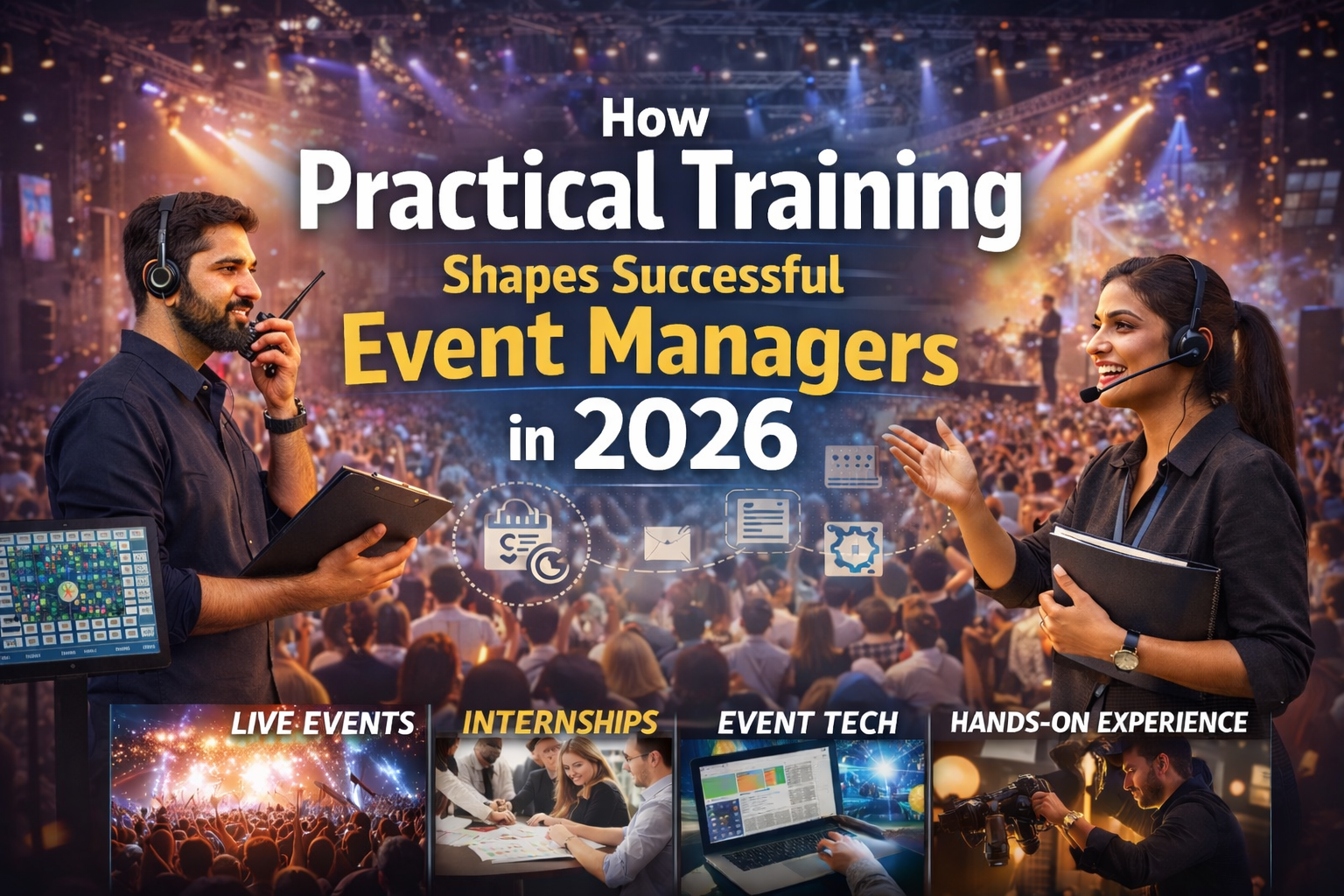
Introduction: Event Management in 2026 – A Skill-Driven Industry
The event management industry in 2026 is no longer impressed by theory-heavy resumes or certificate-only profiles. From corporate conferences and mega exhibitions to luxury weddings and international destination events, the industry now demands professionals who can execute flawlessly on-ground.
This shift has completely transformed event management education 2026, where practical training in event management has become the backbone of successful careers. Employers today don’t ask what you studied—they ask what you have handled.
This blog explores how hands-on exposure, live events, internships, real projects, and technology-driven training are shaping the next generation of event professionals—and why choosing an event management course with practical training is essential in 2026.
1️⃣ Why Practical Training Matters More Than Theory in 2026
Industry Shift Toward Hands-On Professionals
In 2026, the event industry has evolved into a high-pressure, real-time execution-driven sector. Clients expect precision, speed, creativity, and crisis control—skills that cannot be learned from textbooks.
Event companies today prefer:
- Professionals who understand on-ground logistics
- Individuals who can manage vendors and teams
- Candidates who have already worked on live events
This is why practical training in event management is no longer optional—it is essential.
Employers Prefer Experience Over Certificates
Event agencies, corporate houses, and wedding planners now shortlist candidates based on:
- Live event exposure
- Internship experience
- Real project portfolios
Degrees and certificates act as entry points—but experience closes the deal.
Modern event management education 2026 focuses on blending classroom concepts with live execution, ensuring students are industry-ready from day one.
2️⃣ Live Event Exposure: Learning Beyond Classrooms
Corporate Events, Weddings, Exhibitions & Concerts
Live event training allows students to step into real-world scenarios such as:
- Corporate conferences & product launches
- Luxury and destination weddings
- Trade exhibitions & expos
- Concerts, festivals, and brand activations
Each format comes with unique challenges—timelines, client expectations, budgets, and scale.
On-Ground Responsibilities Students Handle
Through real event experience for students, learners actively manage:
- Registration desks and guest coordination
- Vendor setup and stage logistics
- Backstage operations
- Time schedules and event flow
This level of exposure builds confidence and professional maturity—something classrooms alone cannot deliver.
3️⃣ Internships & Live Projects: The Backbone of Event Careers
Vendor Coordination in Real-Time
Internships expose students to vendor ecosystems:
- Decorators
- Caterers
- AV teams
- Logistics partners
Students learn how to negotiate, follow up, and manage service quality—critical skills for long-term success.
Client Interaction & Expectation Management
Through event management internships, students:
- Attend client meetings
- Understand briefs and revisions
- Learn professional communication
- Handle client feedback under pressure
Timeline & Logistics Handling
Live projects in event management teach:
- Event timelines and production schedules
- Resource planning
- Budget control
- Contingency preparation
This real exposure transforms students into execution-ready professionals.
4️⃣ Industry Tools & Technology Students Learn Practically
Event Tech Is No Longer Optional
Event professionals in 2026 must be tech-savvy. Practical training now includes:
- Event CRM software
- Guest list & RSVP platforms
- Budgeting and billing tools
AI Tools & Digital Event Management
Modern event management tools 2026 include:
- AI-based guest management
- Digital invitations & QR check-ins
- Event analytics dashboards
- Virtual & hybrid event platforms
Hands-on event technology training ensures students stay relevant in a tech-first industry.
5️⃣ Crisis Handling & Problem-Solving Through Practical Learning
Real Events = Real Challenges
No event goes exactly as planned. Practical training exposes students to:
- Last-minute client changes
- Vendor delays
- Technical failures
- Weather disruptions
Learning Crisis Management On-Field
Through crisis management in events, students develop:
- Calm decision-making
- Backup planning
- Crowd management skills
- Vendor conflict resolution
These experiences build resilience—an essential trait for successful event managers.
6️⃣ Soft Skills Developed Through On-Field Training
Communication & Leadership
On-ground work sharpens:
- Verbal and non-verbal communication
- Leadership under pressure
- Team coordination
Negotiation & Team Management
Students learn:
- Vendor price negotiations
- Managing diverse teams
- Delegation and supervision
These soft skills for event managers are best learned practically, not theoretically.
7️⃣ Corporate & Wedding Event Exposure: Why Specialization Matters
Corporate Event Management Training
Corporate events demand:
- Precision planning
- Brand alignment
- Professional execution
Practical exposure includes:
- Conferences
- Annual meets
- Product launches
Wedding Event Management Courses
Wedding events require:
- Emotional intelligence
- Luxury detailing
- Family coordination
Hands-on wedding event management course exposure helps students identify their specialization early.
8️⃣ How Practical Training Improves Placement & Freelance Opportunities
Portfolio Creation That Speaks
Students graduate with:
- Event photos & videos
- Project reports
- Client references
This strengthens their event management career 2026 prospects.
Industry References & Freelancing Confidence
Live exposure builds:
- Industry contacts
- Vendor networks
- Freelancing readiness
Graduates confidently pursue event management jobs after course or independent projects.
9️⃣ What Employers Look for in Event Managers in 2026
Modern recruiters prioritize:
- Execution mindset
- Pressure-handling ability
- Tech awareness
- Problem-solving skills
These skills required for event managers can only be built through practical learning.
🔟 Choosing the Right Event Management Institute for Practical Learning
Industry Mentors & Live Exposure
The right institute offers:
- Mentorship by industry professionals
- Regular live event participation
- Hands-on workshops
Placement & Career Support
A practical event management course should provide:
- Internship opportunities
- Placement assistance
- Freelance guidance
Institutes like NDIEM focus strongly on real-world exposure, making them a preferred choice for students serious about building a career in event management after 12th.
Conclusion: Practical Training Is the Future of Event Education
In 2026, success in event management depends on what you have done, not just what you have studied. From live events and internships to crisis handling and technology tools, practical learning in event management shapes confident, employable professionals.
Choosing an event management course with live projects ensures:
- Faster placements
- Better freelancing opportunities
- Long-term career growth
For aspiring professionals, investing in event management education 2026 that prioritizes hands-on learning is the smartest career decision.
NDIEM – The Best Event Management Institute in Delhi
NDIEM (New Delhi Institute of Event Management) is widely recognized as the best event management institute in Delhi, offering industry-focused education designed to create job-ready professionals. With a strong emphasis on practical training, NDIEM bridges the gap between classroom learning and real-world event execution. Students gain hands-on exposure through live events, internships, workshops, and industry-led sessions that prepare them for corporate events, weddings, exhibitions, and large-scale productions.
The institute’s curriculum is aligned with current and future industry demands, ensuring students develop both technical expertise and essential soft skills. Guided by experienced event professionals, learners build confidence, leadership, and problem-solving abilities. For aspiring event planners looking to build a successful career, NDIEM provides the right mix of knowledge, experience, and placement support, making it the preferred choice for event management education in Delhi.
FAQs
1. Why is practical training essential for Event Managers in 2026?
Practical training is essential for Event Managers in 2026 because the industry now demands execution-ready professionals, not just theoretical knowledge. Live events involve real-time problem-solving, vendor coordination, budget control, and client handling—skills that cannot be mastered through classrooms alone. With increasing competition and tighter event timelines, employers prefer candidates who have already worked on-ground. Practical exposure helps students understand pressure management, teamwork, and decision-making, which are core requirements for successful Event Managers in 2026.
2. How does live event exposure help Event Managers in 2026 succeed?
Live event exposure helps Event Managers in 2026 develop confidence, adaptability, and operational clarity. By working on real weddings, corporate events, exhibitions, and concerts, students learn how events function beyond planning documents. They understand venue coordination, stage setup, guest flow, and last-minute changes. This exposure also builds professional maturity and industry awareness. For Event Managers in 2026, live experience becomes a strong portfolio asset and significantly improves employability and freelance opportunities.
3. What role do internships play for Event Managers in 2026?
Internships play a critical role for Event Managers in 2026 by bridging the gap between education and industry expectations. Through internships, students gain hands-on experience in client communication, vendor negotiations, budgeting, and event execution. They also learn professional ethics and workplace discipline. Many employers prefer hiring interns they have already trained. For Event Managers in 2026, internships are not optional—they are a stepping stone to placements, freelancing, and long-term career growth.
4. How does practical training improve problem-solving for Event Managers in 2026?
Practical training improves problem-solving skills for Event Managers in 2026 by exposing them to real challenges like vendor delays, weather issues, technical failures, and last-minute client demands. These situations teach quick thinking, contingency planning, and calm decision-making under pressure. Unlike theory-based learning, on-field training builds instinctive responses to crises. Successful Event Managers in 2026 are those who can adapt instantly and ensure smooth event execution despite unexpected obstacles.
5. What technical skills do Event Managers in 2026 learn through practical training?
Through practical training, Event Managers in 2026 learn essential technical skills such as event budgeting, scheduling, vendor management, event technology usage, CRM tools, and digital guest management systems. They also gain exposure to AI-powered planning tools, virtual event platforms, and data-driven event analytics. These skills help them manage events efficiently and professionally. In a tech-driven event industry, practical exposure ensures Event Managers in 2026 stay relevant and competitive.
6. How does practical learning develop leadership skills in Event Managers in 2026?
Practical learning develops leadership skills in Event Managers in 2026 by placing them in real team-based environments. Managing crew members, coordinating vendors, and reporting to seniors helps students learn responsibility and accountability. They understand how to delegate tasks, motivate teams, and resolve conflicts. These leadership qualities cannot be developed through theory alone. For Event Managers in 2026, strong leadership is essential to manage large-scale events and diverse stakeholders effectively.
7. Why are soft skills important for Event Managers in 2026?
Soft skills are crucial for Event Managers in 2026 because events are people-centric businesses. Communication, negotiation, time management, and emotional intelligence directly impact client satisfaction. Practical training enhances these skills by enabling students to interact with real clients, vendors, and teams. Strong soft skills help Event Managers in 2026 manage expectations, handle stress, and build long-term professional relationships, which are key to sustained success in the industry.
8. How does practical exposure help Event Managers in 2026 handle clients better?
Practical exposure helps Event Managers in 2026 understand client psychology, expectations, and communication styles. By participating in client meetings and planning discussions, students learn how to present ideas, manage budgets, and handle feedback. This experience builds confidence and professionalism. Event Managers in 2026 who are trained practically are better equipped to manage demanding clients, ensure clarity, and deliver events that meet or exceed expectations.
9. What types of events should Event Managers in 2026 train for practically?
Event Managers in 2026 should train practically across multiple event formats, including corporate conferences, exhibitions, weddings, social events, product launches, and virtual or hybrid events. Each format requires different planning styles and execution skills. Exposure to diverse events helps Event Managers in 2026 identify their specialization and become versatile professionals capable of adapting to changing industry demands.
10. How does practical training support freelancing for Event Managers in 2026?
Practical training supports freelancing for Event Managers in 2026 by building real portfolios, industry contacts, and execution confidence. Freelancers must independently manage clients, vendors, and timelines. On-ground training prepares them for this responsibility. With practical experience, Event Managers in 2026 can confidently take up independent projects, negotiate pricing, and deliver professional results, making freelancing a viable and scalable career option.
11. What role does technology play in practical training for Event Managers in 2026?
Technology plays a major role in practical training for Event Managers in 2026. Students learn to use event management software, digital check-ins, virtual platforms, and AI-based planning tools. Practical exposure ensures they understand how technology enhances efficiency and guest experience. For Event Managers in 2026, being tech-savvy is no longer optional—it is a core professional requirement.
12. How does practical learning impact placements for Event Managers in 2026?
Practical learning significantly improves placement opportunities for Event Managers in 2026. Employers prefer candidates who can start working immediately without extensive training. Live event experience, internships, and project portfolios make candidates job-ready. Event Managers in 2026 with strong practical backgrounds stand out during interviews and are more likely to secure placements with reputed event companies.
13. Why do employers prefer practically trained Event Managers in 2026?
Employers prefer practically trained Event Managers in 2026 because they reduce training time and execution risk. These professionals understand workflows, industry challenges, and client expectations from day one. Practical exposure also indicates reliability and adaptability. In a fast-paced industry, employers value Event Managers in 2026 who can deliver results under pressure without constant supervision.
14. How does practical training prepare Event Managers in 2026 for industry pressure?
Practical training prepares Event Managers in 2026 for industry pressure by exposing them to tight deadlines, multitasking, and high client expectations. Real events simulate stress scenarios that help students build resilience and confidence. Over time, they learn to remain calm, organized, and solution-oriented. This mental preparedness is critical for Event Managers in 2026, where pressure handling defines professional success.
15. How should aspiring Event Managers in 2026 choose an institute for practical training?
Aspiring Event Managers in 2026 should choose an institute that prioritizes live events, internships, industry mentors, and hands-on projects. The focus should be on practical exposure rather than only classroom teaching. Institutes offering real event participation and placement support help students transition smoothly into the industry. For Event Managers in 2026, the right practical training environment is the foundation of a successful career.